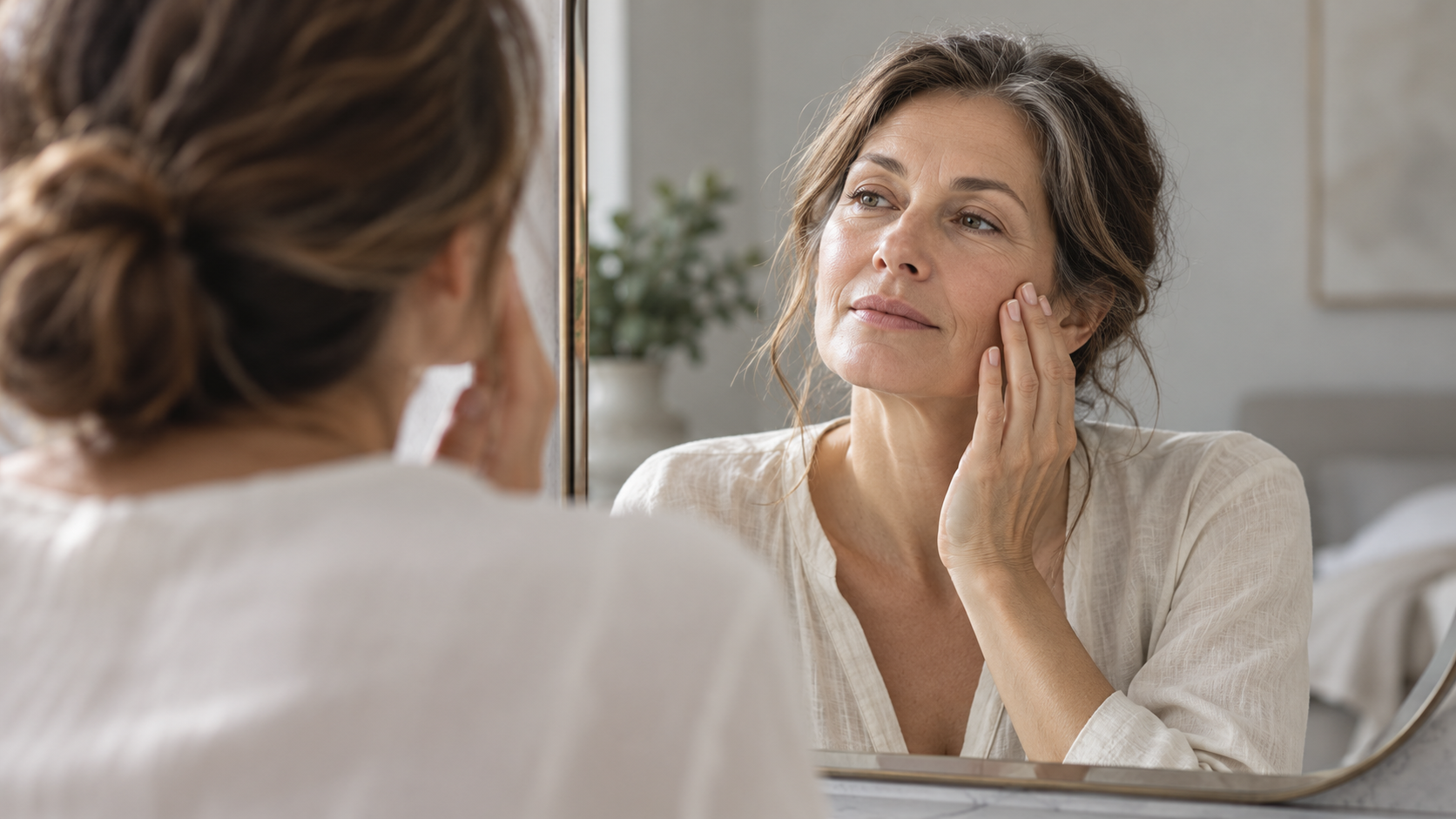
Many women begin to notice changes in their skin long before they reach menopause. Their skin may feel drier, less firm, more sensitive or simply different from what they have always known.
What is often overlooked is that these changes can begin years earlier, during a transitional phase known as perimenopause.
While we tend to associate skin ageing with the passing of time, hormonal changes also play an important role in how our skin looks, feels and functions.
When do the first skin changes begin?
Perimenopause commonly begins in our forties, although for some women it can start in their late thirties. This transitional phase lasts around four years on average, but it can extend to eight years or occasionally longer before menopause, which typically occurs around the age of 51.
During this time, oestrogen levels fluctuate, sometimes significantly, before eventually declining. These hormonal changes can affect the skin even while menstrual cycles are still relatively regular.
Some women notice increased dryness or sensitivity, while others experience changes in oil production, breakouts, uneven pigmentation or a gradual loss of firmness.
Not every woman experiences the same changes, and not every skin concern during this period is caused by hormones. However, understanding the relationship between hormonal fluctuations and skin health can help explain why our skin’s needs may be changing.
Menopause and skin: what happens as oestrogen declines?
Oestrogen plays an important role in maintaining collagen, skin elasticity, hydration and the normal functioning of the skin barrier.
As oestrogen levels decline, particularly after menopause, collagen loss can accelerate. Research suggests that skin collagen may decrease by as much as 30% during the first five years after menopause, although this varies between individuals.
But collagen is only part of the story.
The skin may become less efficient at retaining moisture, its protective barrier can become more vulnerable, and its natural repair processes may slow down.
Changes in facial fat distribution and deeper supporting structures also contribute to the gradual changes we notice in facial contours.
The result may be skin that appears thinner, less firm, less radiant and more prone to fine lines and wrinkles.
Why might your usual skincare routine no longer be enough?
One of the most common things we hear from patients is:
“I’m using exactly the same products, but my skin just doesn’t look the same anymore.”
And there is a reason for that.
As our skin changes, so do its needs. A skincare routine that worked perfectly a few years ago may no longer provide the same results.
However, this doesn’t necessarily mean using more products or choosing stronger ingredients.
Often, it means reassessing what the skin actually needs: supporting its protective barrier, maintaining hydration, encouraging healthy skin renewal and addressing specific concerns without causing unnecessary irritation.
Ingredients such as antioxidants, retinoids and moisturising agents can be beneficial, but they should be chosen according to the individual’s skin condition and tolerance.
How can aesthetic medicine help?
One of the misconceptions surrounding aesthetic medicine is that we should wait until visible signs of ageing become more pronounced before considering treatment.
In reality, there is no specific age at which we should begin caring more actively for our skin.
During perimenopause, the focus may be on maintaining skin quality, supporting hydration and addressing early changes in texture, pigmentation or firmness.
Later, as changes become more noticeable, different approaches may be appropriate.
Technologies such as radiofrequency, focused ultrasound and certain lasers can help stimulate collagen remodelling and improve specific aspects of skin quality when appropriately indicated.
In other cases, carefully selected injectable treatments may help improve hydration, skin quality or areas of volume loss.
The important point is that there is no single treatment suitable for every woman or every stage of hormonal change.
A woman experiencing early skin dryness and sensitivity during perimenopause will have very different needs from someone experiencing significant skin laxity several years after menopause.
This is why a thorough assessment and a personalised approach are so important.
Menopause and skin: how to adapt your daily care
Taking care of our skin during this transition is not about trying to stop ageing.
It is about understanding that our skin is changing and adapting the way we care for it.
Daily sun protection, appropriate skincare, balanced nutrition, regular physical activity and healthy lifestyle habits remain essential.
When needed, personalised medical treatments can complement these measures and help address specific skin concerns.
And perhaps most importantly, we should not wait until menopause to start paying attention to these changes.
At Rejuve Mediclinic, we believe that healthy skin ageing begins with understanding the skin, recognising its changing needs and supporting it through every stage of life.
Our goal is not to change the way you look, but to help your skin remain healthy, resilient and naturally beautiful as it evolves.